Monday, November 14, 2016

Giraffes Can't Dance

Third Grade students looked at the artwork of Edgar Degas, an artist who loved to draw and paint dancers. He was very interested in drawing people in motion and spent a lot of time doing gesture drawings, or drawings of people moving. Students then read "Giraffes Can't Dance" by Giles Andreae. Students drew a giraffe dancing and colored it with markers. Then they painted a background for their giraffe, much like the illustrations in the book. They focused on the different values in a moonlit sky and painted the sky lighter near the moon, and darker away from the moon.


Textured Chameleons

Kindergarten students learned that we use the word texture when we’re describing how something feels. Students created texture rubbings with texture plates. Then they explored making texture with paint by using texture scrapers in tempera paint. Students saw a video clip of a chameleon changing color, and read A Color of His Own by Leo Lionni. Then they traced chameleons, cut them out of their texture rubbings, and glued them to painted texture background. Finally, they wrote about where their chameleon could be hiding.


Dinosaurs

First Grade students practiced observation drawings by drawing dinosaur figurines at their table groups. Then they added a horizon line and other details. Finally, they painted their dinosaurs with watercolors.  


Tuesday, October 25, 2016

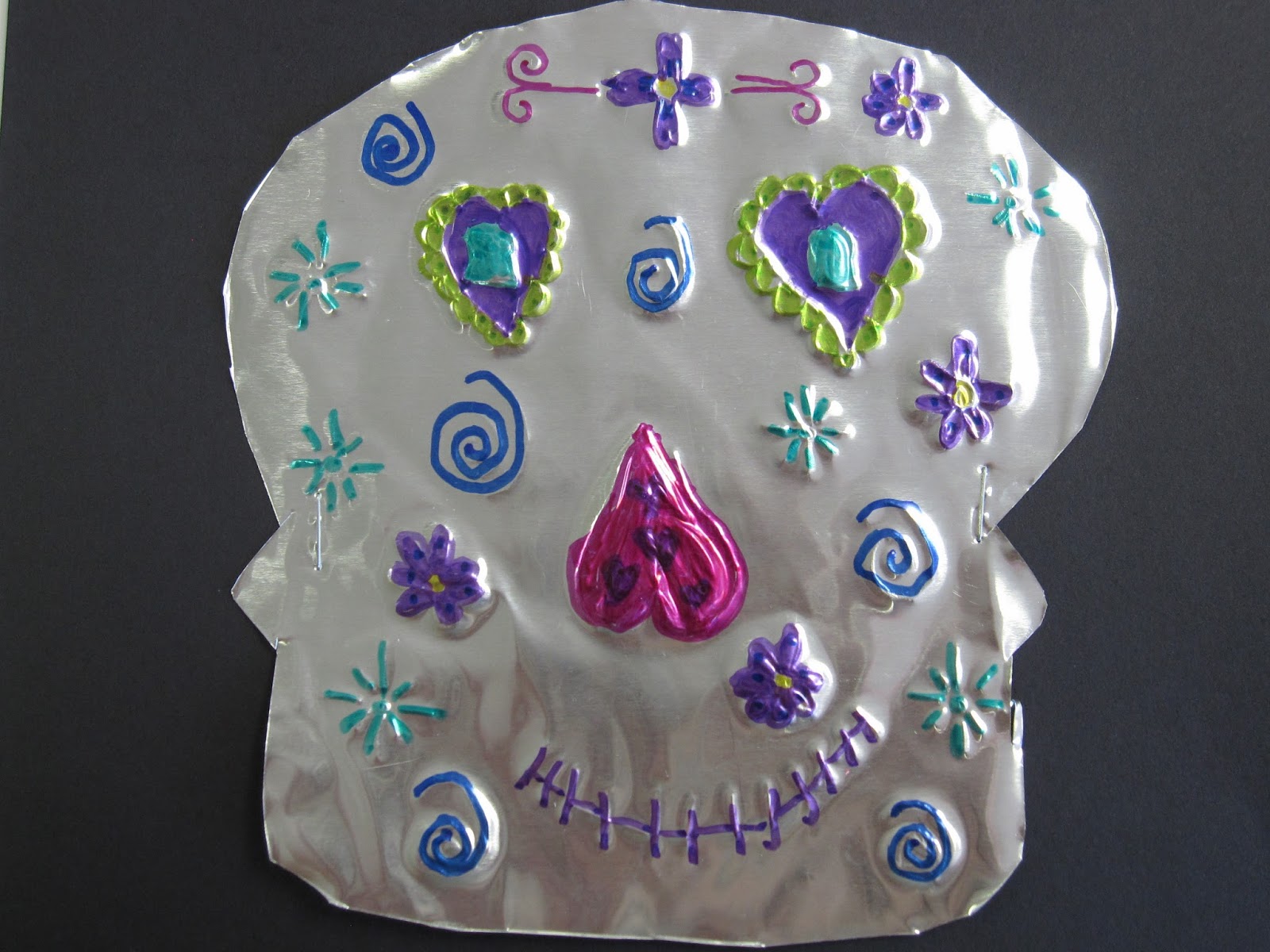
Metal Tooling Masks

5th Graders learned about the art of repousse, also known as metal tooling. Students designed either a Dia de los Muertos mask or an animal mask. They embossed (popped out) parts of their image, which created a relief sculpture.  


Trapeze Acrobats Inspired by Alexander Calder

Third Grade students learned about Alexander Calder, an artist who created kinetic (movable) sculptures. He first created an entire circus from found objects. He also made the first mobiles, and liked how his art could change just by a breath of wind. Students created their own trapeze acrobats after watching a video clip of trapeze performers.


Molas


Molas are made by the Kuna people who live in Panama and Colombia. Women sew many layers of fabric together and then cut away layers of fabric in a design to show the fabric underneath. Then the women wear these fabric designs on their dresses. When they are tired of wearing that particular design, they cut off the mola and sell it. It takes the women from two weeks, to six months to make one mola.


Fourth Grade students designed their own molas, but created them in the opposite way of the Kuna women. Usually, the artist must cut away layers of fabric to show the fabric underneath. Instead of doing this, students glued layers of paper together, showing just a little bit of the color underneath.


Urban Landscapes


Second Graders discussed characteristics of urban landscapes, also known as cityscapes. Students drew a city skyline and then drew many urban details. They colored the sky with oil pastels.