Friday, May 30, 2014

Tesselations


4th graders looked at artwork by M.C. Escher and learned about tessellations. First, they created a shape that would tessellate. Then they traced this shape until in covered their paper. Finally, they brainstormed what they thought their shape looked like and drew those details into each shape. Then they colored their tessellations.


Metal Tooling


5th Graders learned about the art of repousse, also known as metal tooling. Students designed symmetrical masks and embossed them on to pieces of metal. They colored them with permanent markers and used beads, twine and raffia for embellishment. Students discussed the purpose of masks around the world. Many of their masks were inspired by masks from Africa.


Amate Bark Painting

Third Grade students learned that Amate Bark Paintings are traditionally made in Puebla, Mexico where their bright colors catch the eyes of many visitors. These bark paintings have been made for many years, but have most recently been made to sell to tourists. Artists in Puebla take the bark from mulberry trees and fig trees, soak it in water, and then pound it with a rock to form a large piece of paper. Then they use brightly colored paints to paint animals, especially birds. 


Monday, April 28, 2014

Winslow Homer Seascapes

1st grade students looked at Winslow Homer's seascapes. They discussed the word seascape and compared it to landscape and cityscape, which they've already been introduced to either in Kindergarten or earlier this year. Students learned that Winslow Homer was often trying to show the power and danger of the sea in his seascapes. Students drew and painted boats in their seascapes.


Peace Inspired Artwork

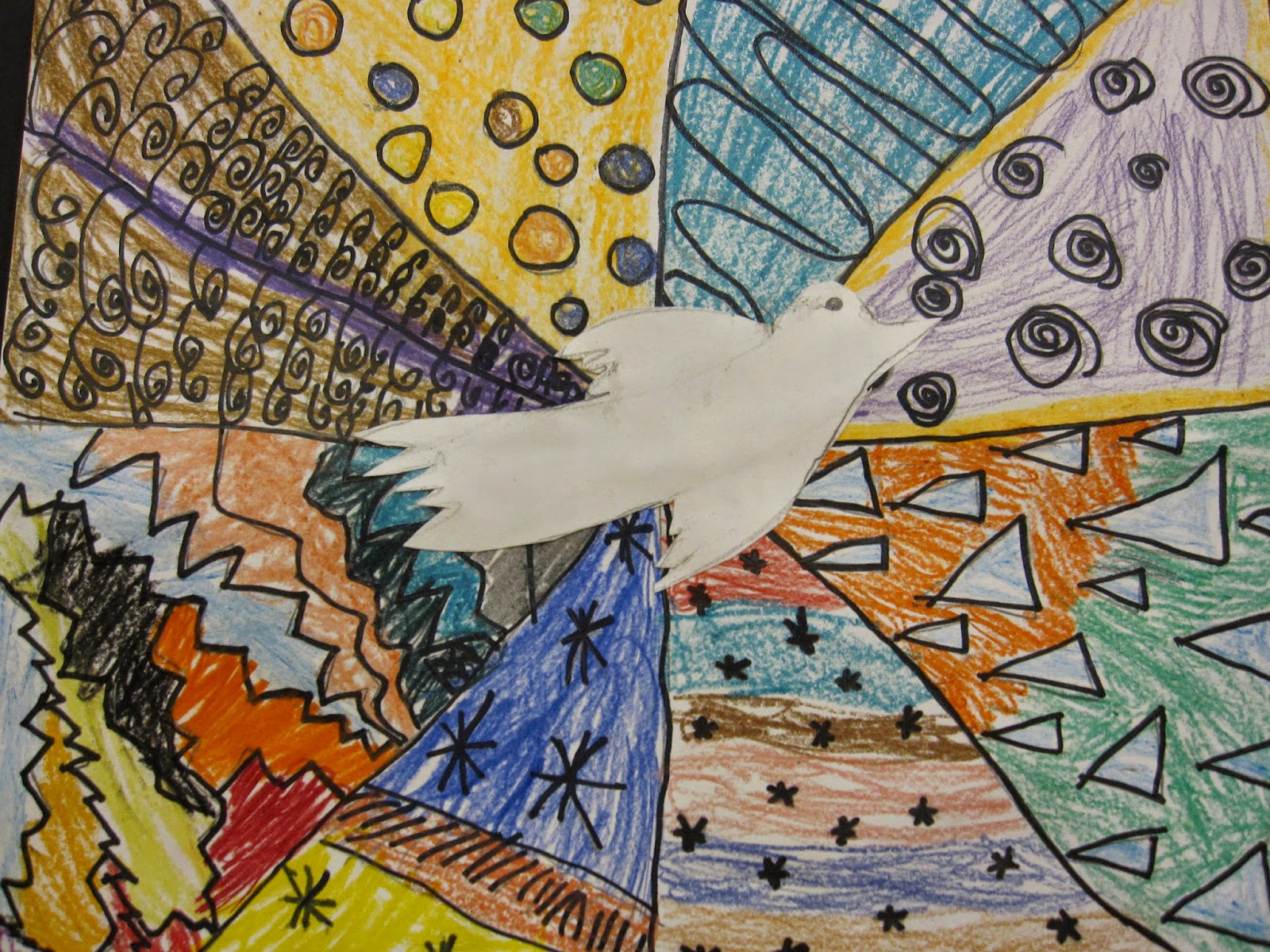
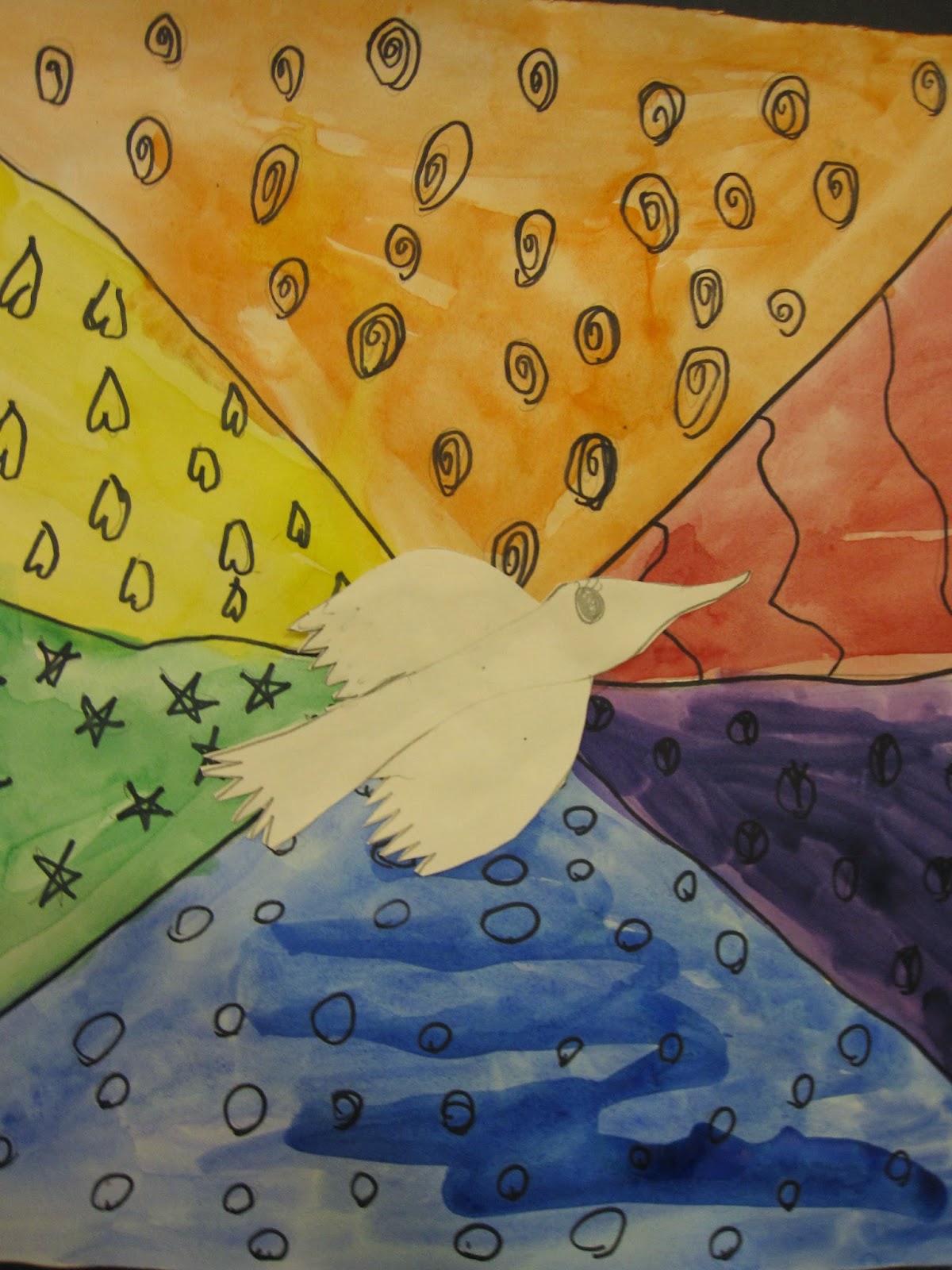
Students in 2nd, 3rd and 4th grades created artwork about peace. Students looked at Picasso's "Guernica" which depicts war. Then they compared that artwork with his "Dove of Peace." Students discussed peace symbols. (Holding up 2 fingers, the peace sign, the peace dove). Students discussed what peace means to them. Then they read "The Golden Rule" by Ilene Cooper and wrote what could make our world more peaceful. Students created this peace inspired artwork as part of a peace-themed music concert at our school.


Printmaking in Kindergarten

Kindergarten students read “The Dot” by Peter Reynolds. Then students colored many sized dots on their paper. They also cut out dots to be glued on to their paper. The next week, students were introduced to printmaking. Students printed circles with different sized cup, bowls, legos, and other objects. 


Pop Art Self-Portraits

Fifth Grade students looked at artwork by Andy Warhol. Warhol is famous for creating pop-art images. Pop Art is short for popular art which means using everyday pictures or images such as photos of celebrities or mundane things like soup cans, and turning them into fancy museum art. Much of this type of artwork was and is used in advertising. Students altered photos of themselves on a website called www.phixr.com, then traced their photo and finally painted their pop-art portraits. They could only use two colors to paint their portrait in this graphic style. They had to choose complimentary colors (colors across each other on the color wheel) or analogous colors (colors next to each other on the color wheel.)


Los estudiantes de quinto grado observaron algunas obras de arte de Andy Warhol. Warhol es famoso por crear imágenes de arte-pop, que significa usar imágenes de la vida diaria, como fotos de celebridades u objetos mundanos como latas de sopa, y convertirlas en arte para museos. Este tipo de arte se ha usado y se sigue usando en la publicidad. Los estudiantes alteraron fotografías de si mismos usando una pagina web llamada www.phixr.com, ellos trazaron su foto y luego pintaron sus retratos al estilo “arte-pop.” Solo pudieron usar dos colores para pintar sus retratos en este estilo gráfico. Tuvieron que escoger colores complementarios (colores que estén directamente de lados opuestos en la rueda de colores) o colores análogos (colores que estén adyacentes en la rueda de colores).