4th graders looked at artwork by M.C. Escher and learned about tessellations. First, they created a shape that would tessellate. Then they traced this shape until in covered their paper. Finally, they brainstormed what they thought their shape looked like and drew those details into each shape. Then they colored their tessellations.
Friday, April 24, 2015
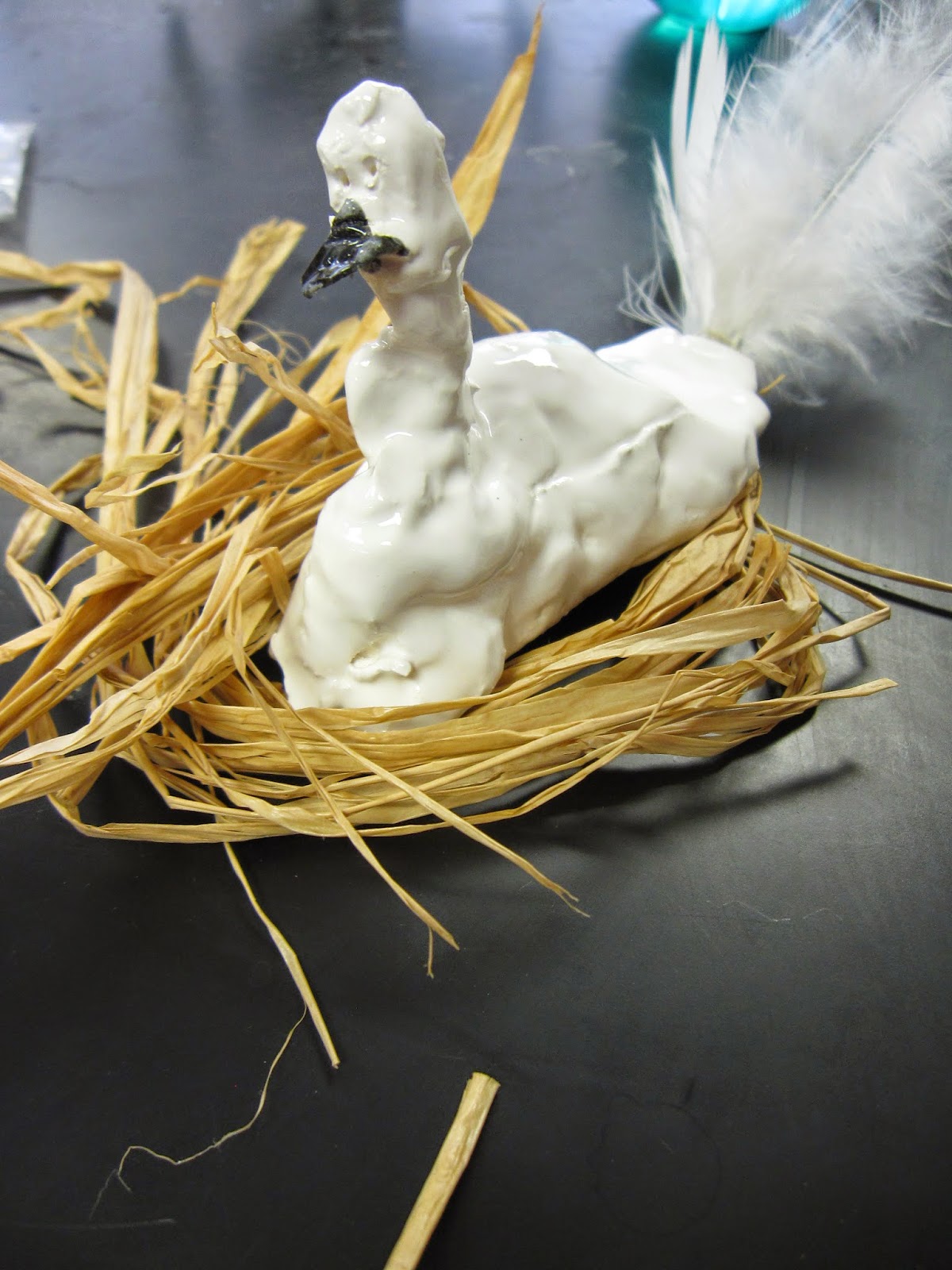
Clay Birds
Mondrian Inspired Arrtwork
Kindergarten students
discovered the work of Piet Mondrian. They learned that he first painted
landscapes, but then decided to break down landscapes into their simplest form:
black lines and primary colors. It was almost like he was painting the
“ingredients” for his landscapes. Students learned to identify the primary
colors and made artwork inspired by Mondrian.
Los estudiantes de kinder descubrieron las obras de Piet Mondrian. Ellos
aprendieron que al principio el pinto paisajes, pero luego decidió desarmar los
paisajes en sus formas más simples: líneas negras y colores primarios. Fue como
si estuviera pintando los “ingredientes” de sus paisajes. Los estudiantes
aprendieron a identificar los colores primarios y crearon obras de arte
inspiradas por Mondrian.
Monday, March 30, 2015
Cut Paper Cityscapes
Kindergarteners learned the difference between cityscapes and landscapes. They cut shapes out of construction paper and made sure to overlap some of their shapes to show depth in their artwork. After all, cities are big with many buildings! They used crayons and markers to add details like windows and doors.
George Rodrigue's Blue Dog Inspired Paintings
Third Grade students studied
contemporary artist George Rodrigue, who lived in New Orleans , Louisiana .
Rodrigue is famous for his paintings of “Blue Dog.” Students discovered that
Rodrigue’s “Blue Dog” isn’t always blue. Sometimes Rodrigue paints his dog
different colors with different backgrounds to symbolize the emotions and
events in the United States .
Students chose the type of
dog they wanted to paint and the color they wanted their dog. They mixed tints
and shades of that color to give their dog more details and to make it more
realistic.
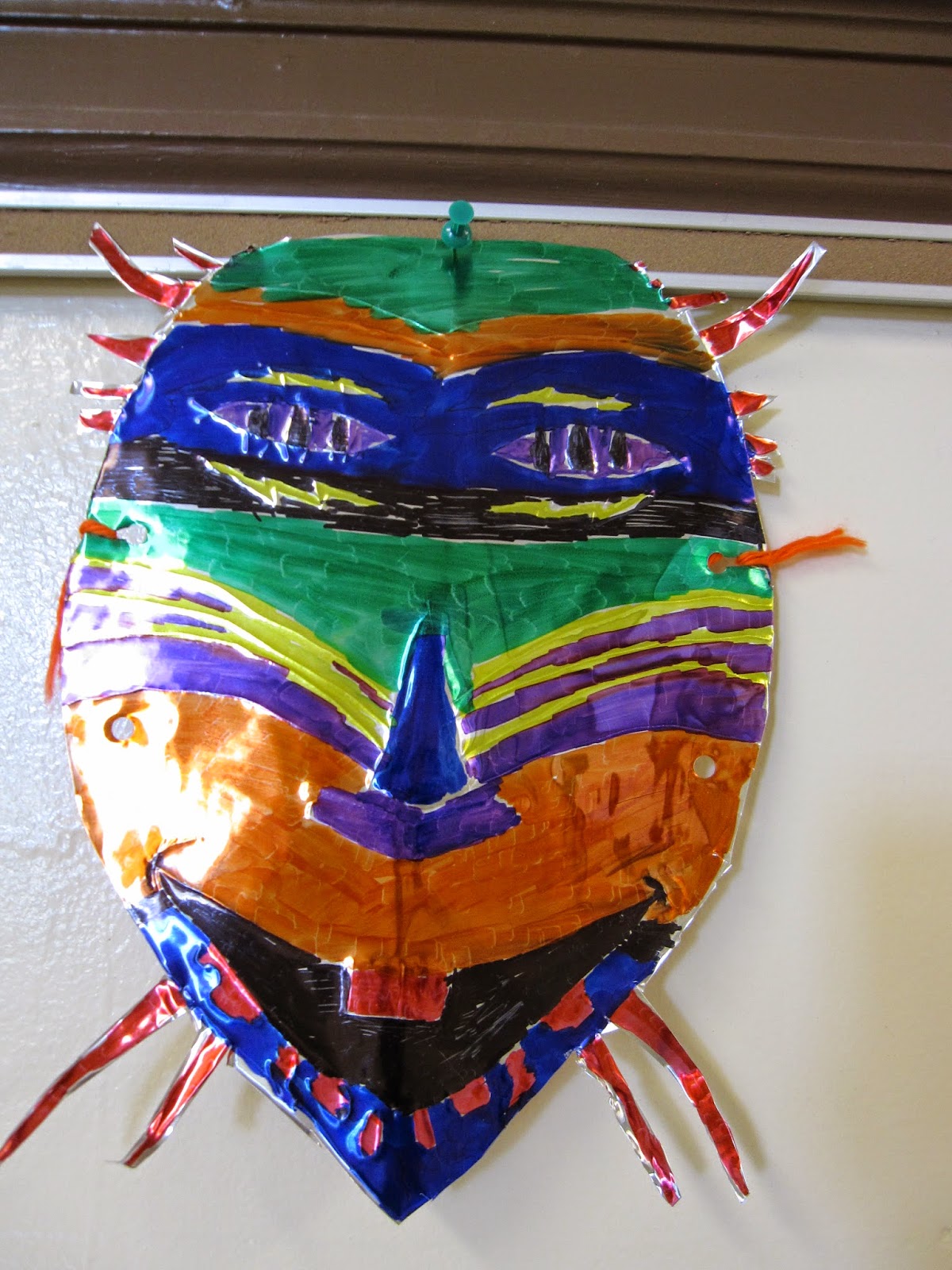
5th Grade Masks
5th Graders learned about the art of repousse,
also known as metal tooling. Students designed symmetrical masks and embossed
them on to pieces of metal. They colored them with permanent markers and used
beads, twine and raffia for embellishment. Students discussed the purpose of
masks around the world. Many of their masks were inspired by masks from Africa .
Molas
Molas are made by the Kuna people
who live in Panama and Colombia . Women
sew many layers of fabric together and then cut away layers of fabric in a
design to show the fabric underneath. Then the women wear these fabric designs
on their dresses. When they are tired of wearing that particular design, they
cut off the mola and sell it. It takes the women from two weeks, to six months
to make one mola.
Fourth Grade students designed
their own molas, but created them in the opposite way of the Kuna women.
Usually, the artist must cut away layers of fabric to show the fabric
underneath. Instead of doing this, students glued layers of paper together,
showing just a little bit of the color underneath.
Subscribe to:
Posts (Atom)